
Drawing Exercises - Observational and Creative

Lessons
About This Lesson Series...
The Drawing Exercises: Observational and Creative lesson is an invigorating exploration of a variety of drawing challenges designed to sharpen perception, strengthen visual problem-solving, and boost creative confidence. Rather than teaching a single project from start to finish, this lesson presents a rich mix of exercises that push students to see, analyze, and respond to visual information in new and powerful ways. These exercises blend observational accuracy with imaginative thinking, helping artists expand both their technical skill set and artistic intuition.
Seeing Beyond What You Think You Know
The lesson begins by focusing on how we actually see. Many artists habitually draw shapes they *think* they see — symbols rather than visual truth. These exercises break that habit by training the eye to observe relationships, angles, and spaces with fresh attention. By asking students to draw subjects with limited visual cues or indirect reference, the lesson lays the groundwork for deeper observational skill. You will learn to recognize subtle shifts in proportion, value, and shape that often go unnoticed, improving visual accuracy across all types of drawing.
Dynamic Gesture and Movement Studies
One key component of the lesson series involves gesture drawing and movement studies. These exercises encourage rapid, expressive mark-making to capture the essential energy and rhythm of a subject. Whether working with human figures, animals, or objects suggested in motion, students learn to convey action and flow without becoming bogged down in detail. This helps loosen drawing habits and teaches you how to prioritize the most important visual information in a limited time frame.
Creative Interpretation and Memory Drawings
In addition to strict observation, the lesson includes exercises that combine memory with creative interpretation. Students may be asked to study a visual reference for a short time and then draw from memory, or to interpret an abstract shape into a fully realized form. These activities strengthen visual retention while encouraging imaginative problem-solving. Drawing from memory also highlights the difference between symbolic drawing and visually accurate rendering, accelerating improvement.
Refining Skills Through Iteration
Throughout the Drawing Exercises: Observational and Creative lesson, repetition and iteration are key. Each exercise builds on the last, helping students internalize valuable techniques and sharpen their observational intuition. Rather than producing a single polished drawing, you complete a series of studies that together deepen your understanding of visual perception. This approach not only improves technical skill but also fosters flexibility — the ability to tackle new subjects with confidence and clarity.
Unlocking Greater Artistic Awareness
By the end of this lesson, students will have experienced a wide range of drawing challenges that expand both technical capability and creative thinking. These exercises provide practical tools you can carry into every drawing project, from realistic studies to imaginative compositions. Whether you're a beginner looking to strengthen foundational skills or an experienced artist seeking fresh ways to observe and interpret the world, this lesson offers lasting value and inspiration.
Here's what you'll need...
- Drawing paper or sketchbook
- Graphite drawing pencil
- Ink pen

Founder of The Virtual Instructor, artist and teacher. Matt makes learning art easy to understand and enjoyable.
Congradulations
This is my first lesson
I can’t see the. Picture so how am I suppose to draw what I can’t see
I do not know how to download the photo references
Hi MAtt,
I very much enjoyed these exercises. Just to let you know, the camera is focused on your work, without showing the examples of ie pears, bananas, and moving man. Unsure what it was. Just FYI.
Cheers
Love this video. What was the first pic? weird?
I could not see any of the subjects. Is this because I’m still on the trial?
Hi Mitzi,
Look for the links under RESOURCES FOR THIS LESSON above. These are links to the photo references.
I only see fruit. But no hand photos
Hi Kathy,
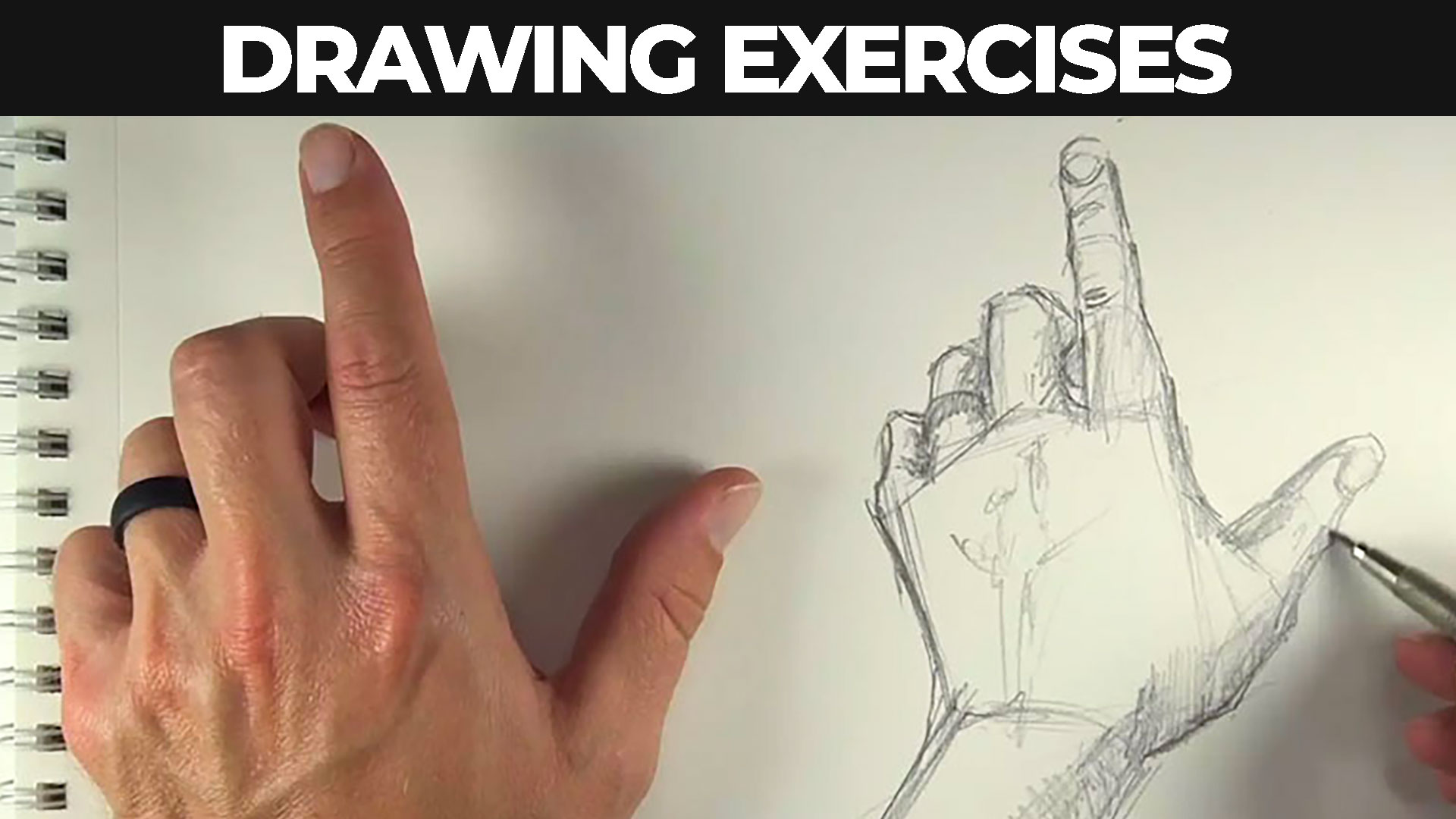
There are no hand photos. We are drawing from direct observation of your non-dominant hand. So, if you are right-handed, look at your left hand and draw it.
Hi Matt, the latter half cross contour line drawing is so helpful. Besides bananas, what other subjects are good for this exercise?
Any simple subjects are good for illustrating this point. Apples work well too. Have a look here…https://thevirtualinstructor.com/cross-contour-lines.html
Hi Matt,
I am taking your course on Udemy and I can print the images for drawing. I believe they are peppers, bird and maybe something else. I sent you messages from Udemy as well as a lot of other students. Can you help or attach the files in a different format. My computer does not recognize the format you have in the course. We would appreciate your help. Thank you.
Myrlande Janvier Russell
Hi Myrlande,
All of the images are in jpeg format. This is a universally readable format. I’m not sure if Udemy has done something to file format, but this is out my hands since I do not have control over their platform. How are you opening the images? What program are you using?
I did not do well with the hand
This is an awesome lesson. Loved doing this. I will be doing this on a regular basis. The hand was challenging but taught a lot. The contour lines lesson helped 100%. My grandson and I do the lines and creative thinking challenge all the time. I love to see what we can come up with.
Thank you so much for your time and effort.
My drawings really are horrible but I have have very much enjoyed this lesson.
PLEASE PLEASE do one of these again.