
Desert Landscape with Watercolor

Lessons
About This Lesson Series...
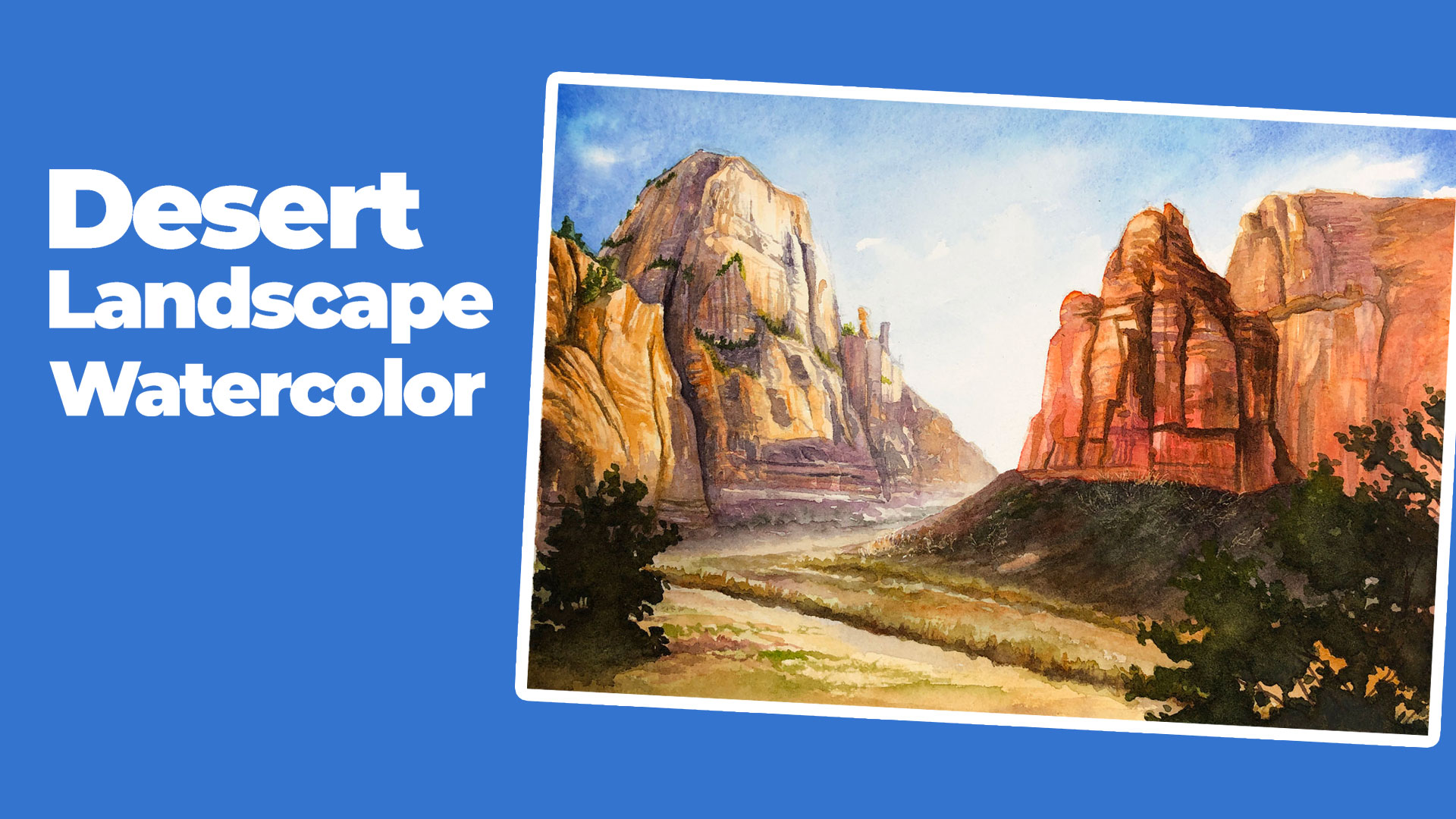
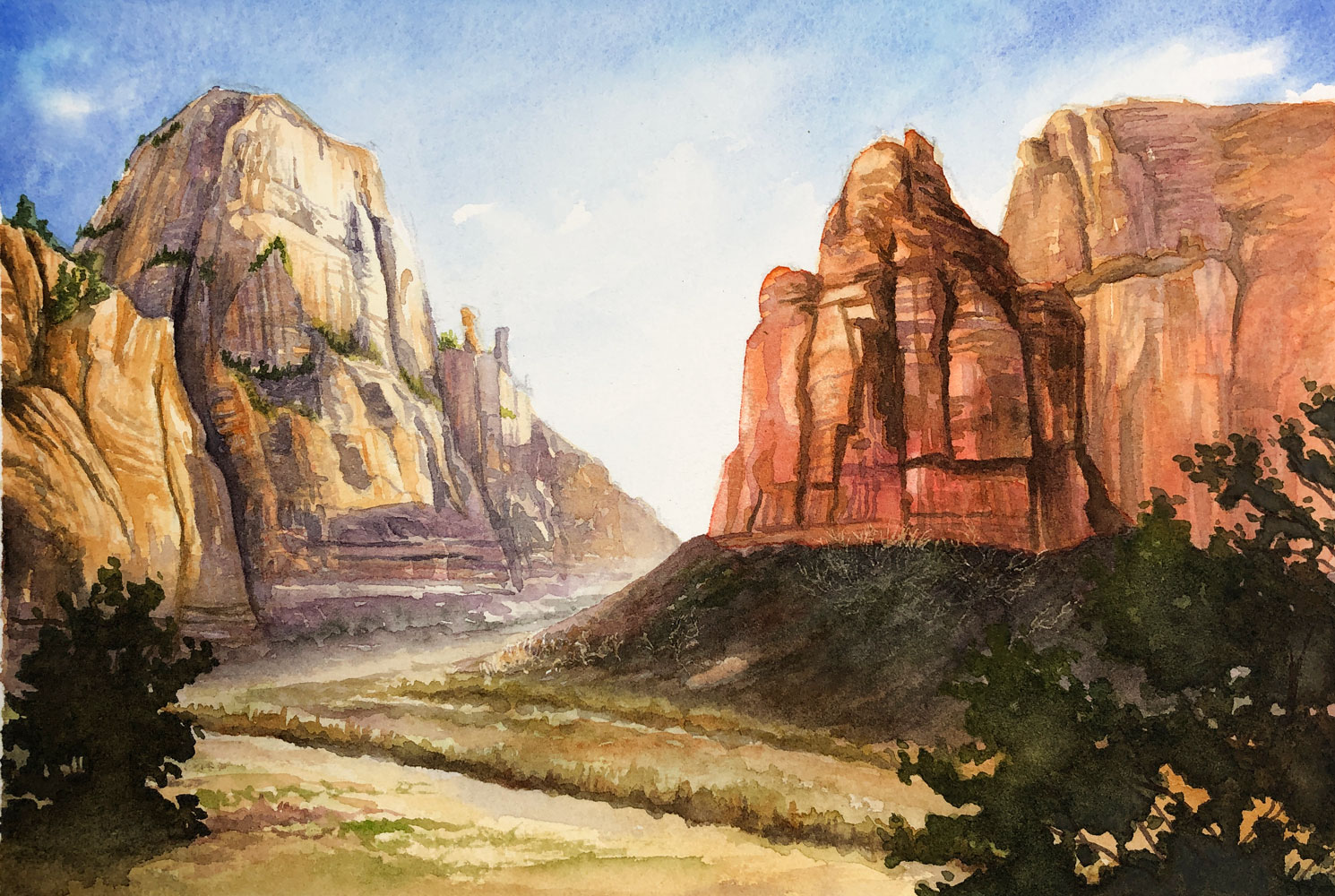
The Desert Landscape with Watercolor lesson series is a comprehensive, step-by-step exploration of painting a vibrant and atmospheric desert scene using watercolor. Designed for artists of all levels, this series walks you through the entire creative process from initial observation and composition to refined washes, color harmony, and final details. Throughout the lessons, you’ll learn how to handle watercolor transparently and expressively to capture the unique light, texture, and mood of a desert environment, transforming a blank sheet into a richly layered landscape full of warmth and depth.
Understanding the Landscape
The series begins with a focus on observation and understanding the desert as a subject. You’ll learn how to analyze the distinctive features of a desert landscape — wide open skies, distant ridges, sun-washed rocks, and minimal vegetation — and how light and atmosphere vary across the scene. This foundational step helps you see beyond mere shapes, allowing you to interpret value relationships, distances, and subtle color shifts that are essential for believable watercolor landscapes. By training your eye early in the process, you gain the tools to plan and develop your painting with confidence.
Planning the Composition
Once you’ve studied the subject, the next stage involves planning the composition on watercolor paper. This lesson teaches how to establish horizon lines, focal points, and the overall structure of the desert scene. You’ll learn how to simplify complex forms into manageable shapes, placing key elements such as distant mountains, rolling dunes, and foreground features so that the viewer’s eye moves naturally through the composition. Careful planning ensures that your painting feels balanced and coherent before paint is applied.
Establishing Underpainting and Value
With composition laid out, the lesson series moves into establishing the underpainting and initial washes. You’ll begin with light, transparent layers to suggest sky, distant land, and major value relationships. This early work focuses on defining the overall tonal structure of the painting, helping you maintain clarity throughout the process. Establishing values early also allows you to preserve important highlights in the paper and guides later color decisions that build the scene’s depth.
Layering Color and Atmosphere
As the painting progresses, you’ll begin layering more saturated color to develop the warmth and subtle shifts of the desert palette. Lessons cover how to mix harmonious hues that suggest the sandy earth, rocky outcrops, and glowing sky. You’ll learn how to use transparent washes to suggest atmospheric perspective — where distant mountains recede into softer, cooler values and foreground areas appear more intense and detailed. Techniques such as wet-on-wet and controlled edges help capture the glow and softness of desert light.
Refining Texture and Detail
With the main colors in place, the series emphasizes refining texture and adding details that bring the landscape to life. You’ll explore techniques for suggesting rock texture, scrub brush, and shifting planes in the terrain using varied brushwork and thoughtful layering. Students learn how to balance sharp edges with softer transitions to maintain depth while keeping key focal areas crisp and engaging.
Final Adjustments and Harmony
The final lessons focus on harmonizing the painting and making finishing touches that enhance impact and unity. You’ll learn how to adjust contrasts, reinforce important color relationships, and ensure that the desert landscape feels cohesive from top to bottom. Subtle refinements help bring out the radiance of the sky and the glow of sunlit earth, culminating in a finished watercolor that captures the beauty and vastness of a desert scene.
Here's what you'll need...
- Graphite pencil (H)
- 140 lb or 300 lb Cold Press Watercolor Paper
- Watercolor Paints
- Nylon Brushes
- Water
- Masking Fluid (Optional)
- Nib Pen (Optional)
- Paper Towels

Founder of The Virtual Instructor, artist and teacher. Matt makes learning art easy to understand and enjoyable.
It’s so good to see you back. Glad for you that they could use the ultrasound. It is preferable than having to have surgery.
Thanks Patricia!
Happy you are back and doing better. Take care!
Matt, what did you call the last brush you showed us I didn’t quite hear what you said? It’s not your accent it’s my hearing.
Thanks,
Pete
Hi Peter,
Sorry for the late response. It is a Sumi brush.
Hey, Matt: Going over the lesson i missed…yes, was down and out for 4 hours straight…so i missed your class 🙁 Darn this thing, but it’s not the Corona yaeh!!!
…tore into my 300# Arches cold press sheet, (which i’ve never used cold before)…can’t wait…will get caught up!
oh! got a new natural sunlight lamp and I can seee 🙂
🙂
Matt — Is it correct that I think you stated pan paints are not as strong in color as paint out of the tube? I have a set of tube Daniel Smith paints and am having difficulty painting the pale/more muted colors. I am heavy of hand which is a burden when painting watercolors so you put that along with the tube paints — I am sure you can imagine my distortion of what you convey in your painting. Please advise how I should proceed with these two cumbersome habits to correct them. Thank you, and I am so glad you are well again and back teaching us!! I LOVE your classes and am a loyal patron. Anne
Love your from down under in canberra
thanks Matt really beautiful. this is saturday so will be back on wednesday all the best
Glad you are back & healthy!
I recently logged into the live lessons videos (desert landscape). I am now caught up. Just wondering when lesson 6 will be posted. I am a beginner and loving it.
My shadows form week 2 look quite purple now that they are dry. When I painted them, they looked like they had a lot of teh Payne’s grey, but not now that they are dry. How can I fix this?
Why wouldn’t you use gouache with the “watercolors” ?
Is it necessary to “stretch” 300# water color paper?
Hello – I was wondering where the photo reference is from? Thank you!
Hi Betina,
This reference photo is from Pixabay.com. I hope this helps.