
Marbles with Graphite and White Charcoal

About This Lesson Series...
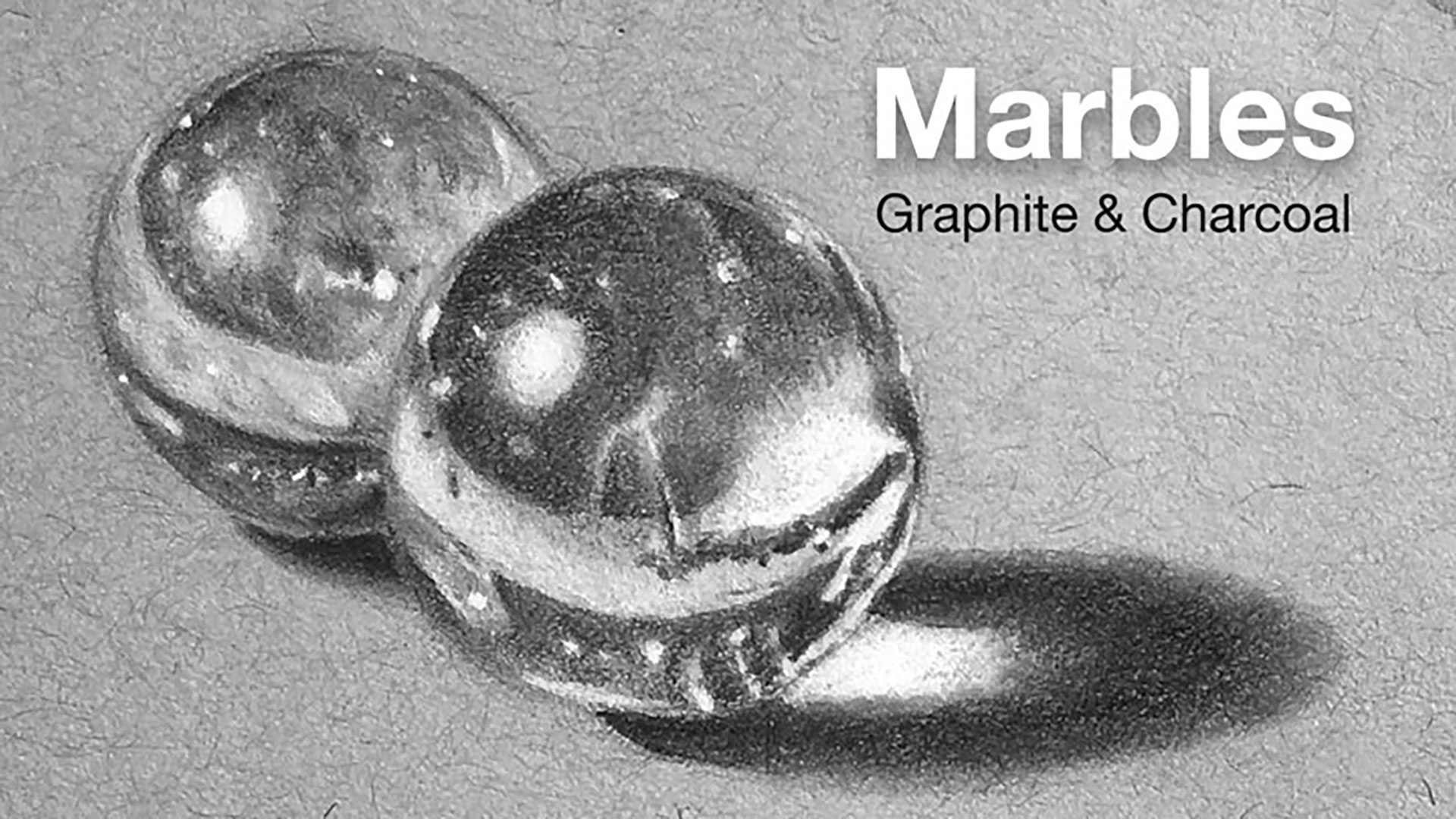
This lesson series is a focused and highly practical exploration of drawing realistically rendered marbles using graphite and white charcoal on gray paper. In this multi-part instructional series, students are guided step by step through the process of capturing reflective surfaces, subtle value transitions, and accurate form using classical drawing techniques. The lessons combine fundamental observation skills with detailed demonstrations of mark-making and tonal control, making this an ideal course for artists seeking to strengthen their skills in realism and contrast.
Materials and Setup
The series begins with an overview of the essential materials and tools. Because gray paper serves as a mid-tone, students learn how to effectively balance dark and light media to create convincing three-dimensional form. Graphite pencils of varying grades are used to build deep shadows and smooth gradients, while white charcoal — often in pencil form — is used to lift highlights and articulate reflective surfaces. A kneaded eraser, tortillons for blending, and a smooth gray drawing paper are also recommended so that the full tonal range can be accurately represented.
Establishing Form and Value
Once materials are gathered, the instructor demonstrates how to establish the basic contour drawing and the lighting setup for the composition. Marbles are unique because of their reflective qualities — the way they catch light, distort background tones, and subtly display internal color or pattern requires careful observation. Students learn how to map out the darkest darks and lightest lights before filling in intermediate tones. This step helps build a strong value structure early in the drawing, making subsequent layers of graphite and charcoal more effective and convincing.
Techniques for Realistic Rendering
The core of the series focuses on advanced rendering techniques that bring marbles to life on paper. The instructor explores how to create smooth gradients with graphite by building up layers gradually, and how to transition cleanly between tones without muddying the surface. Specific attention is given to capturing edge transitions, detailing reflections, and emphasizing the contrast between glossy highlights and deep shadow areas. White charcoal is strategically introduced to heighten highlights and enhance the sense of glossiness and depth.
Blending and Textural Control
Blending tools such as tortillons and paper stumps are used to control smoothness and texture without losing the sharpness or clarity needed for realistic marbles. The instructor explains how to alternate between blending and re-marking with graphite to refine form while preserving crisp values. Attention is also given to how reflected light interacts with the surfaces, as well as how shadows beneath the marbles play a role in anchoring them convincingly on the page.
Artistic Decision-Making
Beyond technical execution, commentary is given on artistic decision-making — when to emphasize contrast, how to simplify complex reflections, and how to interpret what the eye actually sees versus what the brain expects. These insights help students avoid common pitfalls and make confident choices when approaching similar still-life subjects in the future.
Outcomes and Skills Gained
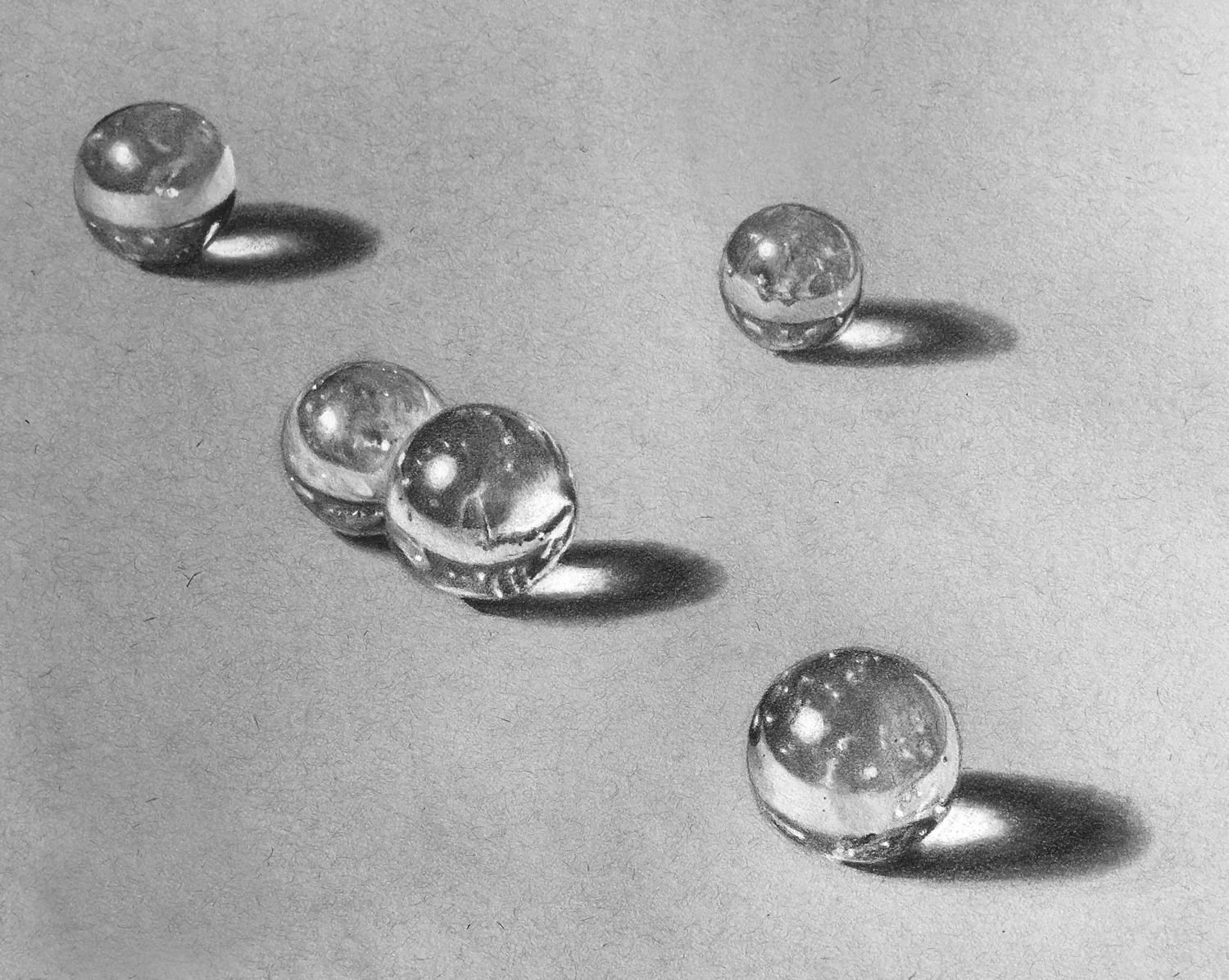
By the end of the lesson series, students complete a fully rendered drawing of marbles that clearly demonstrates a nuanced understanding of value, reflection, and form. More importantly, they build a deeper foundation in observational drawing techniques using mixed graphite and charcoal media on toned paper. Whether you are just beginning to explore realism or looking to refine your technical skills further, this lesson series offers a rich, structured path to greater confidence and skill in drawing.
Here's what you'll need...
- Toned Gray Drawing Paper
- Graphite Pencils
- White Charcoal Pencil
- Blending Stumps
- Kneaded Eraser

Founder of The Virtual Instructor, artist and teacher. Matt makes learning art easy to understand and enjoyable.
I am sorry but I cannot find the Chat Box. Can you Help?
Hi Sandy, You’re watching the recorded version of the Live Lesson on this page. The chat box is on the live feed only.
Thanks for helping with my confusion. I will work harder to keep track of the live feeds.
Hey Matt,
What’s the purpose of the way you sharpen your pencils?
Hi Ronda,
It’s mainly just to get a super sharp tip.