

The Drawing Exercise That Changed the Way I See the World
Every artist remembers a moment when something finally clicked. A lesson, technique, or exercise suddenly made drawing make sense in a way it never had before. For me, that moment came when I was about twelve years old. I was introduced to a simple drawing exercise that completely changed the way I approached drawing. More importantly, it changed the way I understood what drawing really is.
Before that experience, I believed drawing was simply a talent that some people were born with. But after completing this exercise, I realized something incredibly powerful: drawing is a skill. Like any other skill, it can be learned, practiced, and improved. That realization ultimately shaped my career as an artist and teacher, and it’s one of the reasons I’m able to share these lessons with students today.
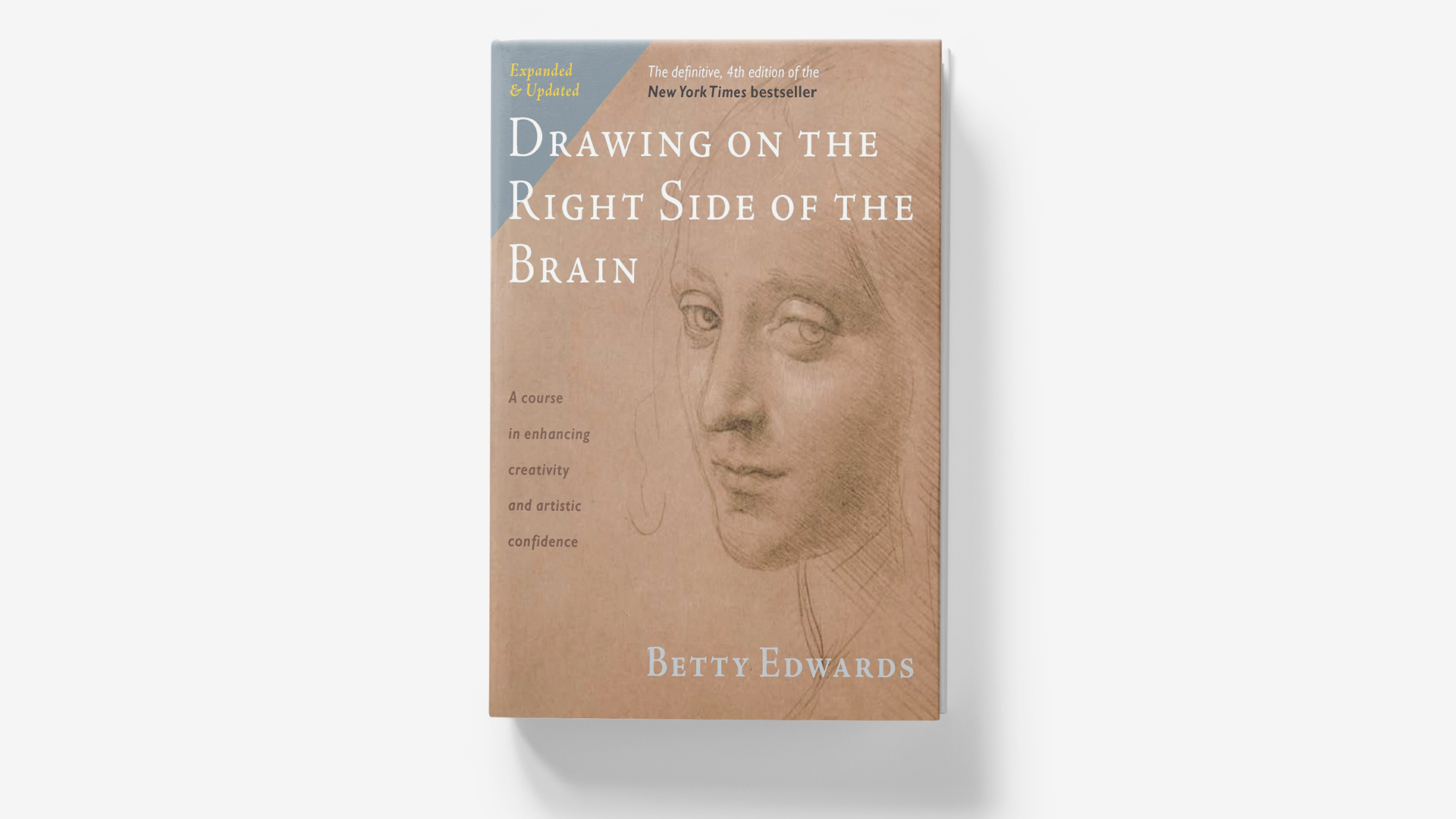
The exercise comes from Betty Edwards’ classic book Drawing on the Right Side of the Brain. If your goal is to create representational artwork—drawings that accurately depict the world around you—this book is well worth reading. It introduces a fascinating way of thinking about how our brains process visual information and explains why so many beginners struggle with drawing accuracy.
Why We Draw What We Think Instead of What We See
One of the biggest obstacles artists face isn’t a lack of talent—it’s the way the brain naturally processes information.
You’ve probably heard someone say, “Just draw what you see.” While that advice sounds simple, it’s actually much harder than it appears. When most people look at an object, their brain immediately labels it. Instead of seeing a collection of lines, shapes, values, and edges, they simply think, “That’s a shoe,” or “That’s a face.”
Once the brain identifies the object, it begins relying on memory instead of observation. Rather than drawing the actual shoe sitting in front of you, your brain constructs a generic symbol of a shoe. The result may resemble a shoe, but it usually doesn’t resemble that shoe.
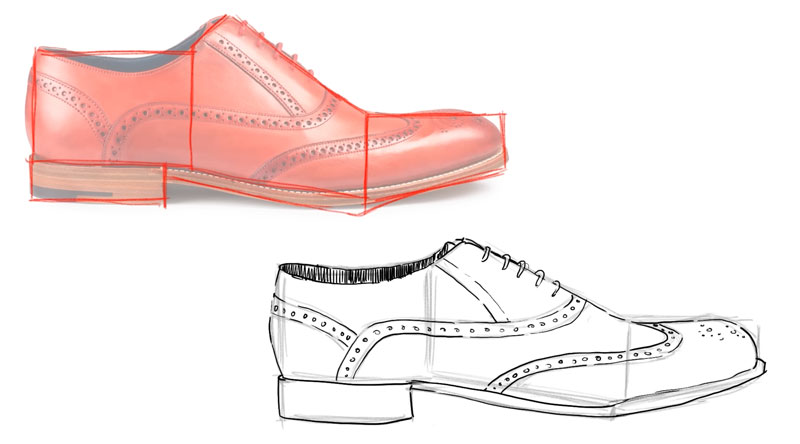
This is one of the primary reasons beginning drawings often look inaccurate.
Seeing Like an Artist
As artists, we have to train ourselves to see differently.
Instead of focusing on recognizable objects, we need to pay attention to the individual elements that make those objects visible. These include line, shape, form, value, color, and texture—the Elements of Art.
Everything we draw is simply an arrangement of these visual elements. Whether we’re creating a realistic portrait or an abstract composition, we’re organizing lines, shapes, colors, and values to communicate an idea.
Representational drawing becomes much easier when we stop thinking about the object itself and begin concentrating on these visual relationships.
The Upside-Down Drawing Exercise
The exercise itself is surprisingly simple.
Begin with a line drawing or contour drawing of a subject. It could be a portrait, an object, or almost any reference image. Turn the reference upside down and place a blank sheet of paper beside it. Your goal is to copy the drawing exactly as you see it—but without turning it right side up.
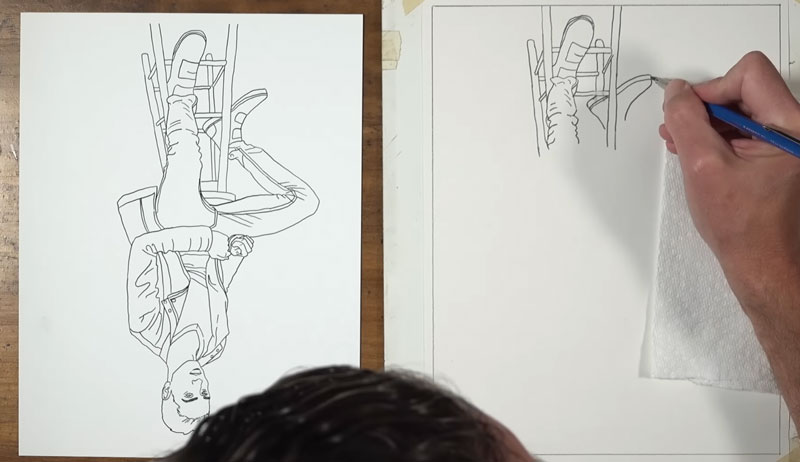
At first, this feels awkward. Your brain keeps trying to identify what you’re drawing, but because the image is upside down, that process becomes much more difficult. Instead of recognizing a face, your attention shifts to the actual lines, angles, curves, and shapes.
Without realizing it, you begin observing rather than interpreting.
Why Drawing Upside Down Works
Drawing upside down interrupts the brain’s tendency to rely on symbols and memory. Since the subject is no longer easily recognizable, you’re forced to pay attention to what actually exists on the page.
Instead of drawing an eye, you’re drawing a curved line next to an angular shape. Instead of drawing a nose, you’re comparing distances between two intersecting contours. Every decision becomes based on observation rather than assumption.
As you continue working, you’ll notice something interesting begins to happen. Your concentration shifts. You become less aware of the object you’re copying and more aware of the relationships between the lines and shapes.
That mental shift is exactly what the exercise is designed to accomplish.
Mistakes Are Part of the Process
While working through the exercise, don’t be afraid to erase and make corrections. In fact, noticing mistakes is actually a positive sign.
When you recognize that a line is misplaced or a shape isn’t quite right, it means you’re beginning to understand the spatial relationships within the drawing. You’re no longer relying on guesses—you’ve started observing carefully enough to recognize inconsistencies.
That awareness is one of the most important skills an artist can develop.
Training Your Brain to Observe
Although the upside-down exercise may seem unusual, it serves an important purpose. It trains your brain to focus on observation instead of identification.
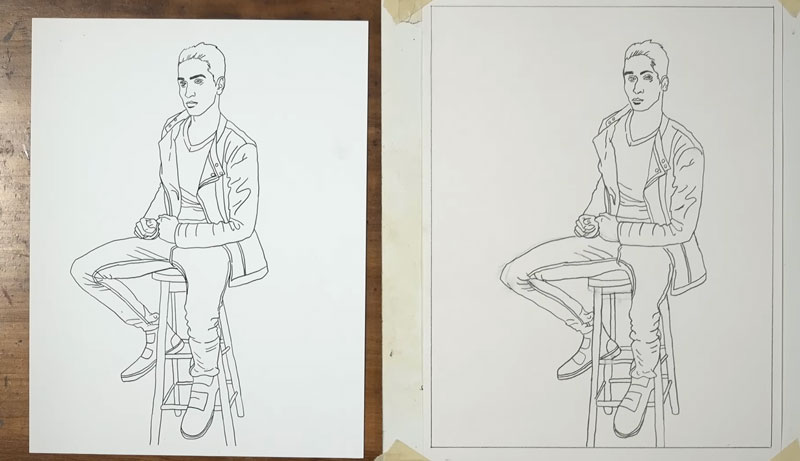
Eventually, you won’t need to turn your references upside down anymore. The goal isn’t to draw everything upside down for the rest of your life. Instead, the exercise develops a habit of careful observation that carries over into every drawing you create.
Over time, you’ll naturally begin noticing angles, shapes, proportions, and value relationships before your brain starts assigning labels to objects.
Drawing Is a Learnable Skill
Perhaps the most important lesson this exercise teaches has nothing to do with drawing upside down.
It teaches that drawing isn’t magic.
It’s not reserved for a select group of naturally gifted people. Drawing is a skill built on observation, practice, and understanding. Once you begin training yourself to truly see, your drawings improve dramatically.
This realization was life-changing for me because it removed the mystery surrounding artistic ability. Instead of believing some people simply “have it,” I discovered that improvement comes from learning how to observe the world differently.
Practice the Exercise More Than Once
If you’ve never tried this exercise, I encourage you to do it. Even if you’ve been drawing for years, revisiting it every once in a while can sharpen your observational skills.
Choose a simple line drawing, turn it upside down, and copy only the lines and shapes you see. Resist the urge to identify the subject. Focus entirely on relationships, angles, distances, and proportions.
When you’re finished, turn both drawings right side up and compare them. You’ll likely be surprised by how accurately you’ve captured the subject—not because you drew an object, but because you observed it carefully.
Final Thoughts
Every artist reaches a point where they stop drawing what they think they see and begin drawing what actually exists in front of them. For me, the upside-down drawing exercise was the turning point that made this possible.
If so, join over 36,000 others that receive our newsletter with new drawing and painting lessons. Plus, check out three of our course videos and ebooks for free.